Are you still struggling to manage your company accounts using file cabinets, spreadsheets, and calculators? It could be time to move on. Cloud accounting software has a lot of easier ways to keep the books of your small business these days.
However, how do you know whether you are prepared for the change? Would you not know what to look for in accounting software? What is to be considered in the selection of an accounting system?
There is no need to worry, as we have created a convenient checklist that provides a quick overview of the key factors to consider when selecting accounting software.
Accounting System Requirements Checklist
General Ledger
In case there is a query about why you use accounting software, then the answer is very straightforward. To be more efficient, productive, and achieve improved business outcomes. The developed software must contain all these essential features. The first one on the checklist is the General Ledger.
Besides the apparent ones listed, we can also tailor the ledger structure to our needs and add new features, such as recurring transactions, account charts, year-end accounts, random financial statements, and special ledgers.
CRM Tool
CRM features can be applied to any business area of their enterprise. This is one way to acquire more customers, increase customer satisfaction, and foster customer loyalty. The only reason you should incorporate a CRM tool into your application is to gain a comprehensive view of the customer data on a unified accounting system. Integrating CRM and accounting software helps improve the service you provide, enabling your workers to work more effectively, and ultimately leading to a more profitable business.
All small to large customer issues are resolved through this with the help of a CRM integration tool. It is a necessity of the time because it speeds up the daily routine and automates and controls the customer lifecycle.
Data Reporting and Analysis
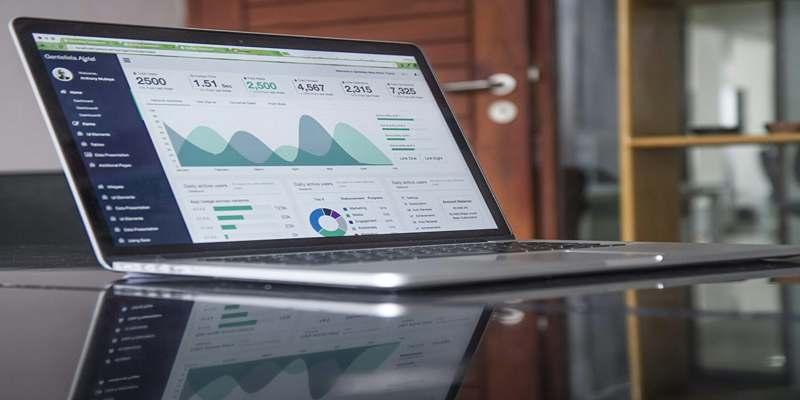
The accounting department, like any other department, requires the ability to share data effectively and easily. Therefore, in accounting software, there are several third-party integrations, as well as accounting software that can be used together to yield results. Therefore, ensure that your financial software developer creates your accounting solution with diversified reporting and analytics features. Ensure that your created application can share the data that is most vital to your business.
Accounts Payable
It maintains records of the money owed to suppliers through a centralized supplier file, as well as payment processing, credit card transactions, and currency conversion services. It creates purchase history, vendor, payment analysis, and tax reports, which make financial operations more efficient.
Accounts Receivable
It is the record of the money due to the company, and it has a client master file that is categorized and prioritized. It automates invoicing, outstanding payments, inventory, and collection techniques. The inclusion of AR in accounting solutions ensures the effective processing of payments, sound cash flow control, and streamlining of financial activities to ensure the long-term effectiveness of businesses.
Fixed Assets & Payroll
The definition of fixed assets is essential to provide proper tracking of equipment, barcodes, tax benefits, and maintenance, particularly with the use of GL to compute depreciation automatically. Payroll is also important as it deals with employee accounts, leave, overtime, and dues, ensuring that nothing is overlooked. The payroll software included in the system streamlines record-keeping, enhances compliance, and facilitates organizational efficiency and profitability by effectively managing financial and employee-related operations.

Customization and Scalability
Nowadays, nearly every organization is developing customized software that benefits its business. Regardless of the size of your business, it must always contend with the market environment and expand. If your company is small, you will certainly require software that helps your business develop and grow quickly with minimal effort. The accounting software can also enhance its scalability accordingly, since it will be highly expensive to upgrade the software as the business grows. As you upgrade the customized software, you will be able to do so with ease and achieve improved results that meet market requirements.
Security of Data
The term security is very important when accounting and finance are involved. In the financial accounts, a lot of confidential information about the company is found. Therefore, there is a need to promote security on various levels. Corporate managers of third-party corporations should ensure that all information from the accounting departments is confidential and password-protected within the organization. Security is essential and fundamental to any organization. Therefore, when planning to create an application, ensure it meets all the security requirements of a banking application.
Cloud Solution
Mobility has motivated firms to conduct their operations anywhere without interference. However, it is not possible in cases where you are operating a server that operates in a specified range. Mobile application dependency enters the picture. Consider this as a significant advantage because of being able to create a system that is accessible from anywhere. The cloud solution enables teams to access the system wherever they are, on any computer, and you do not need to install anything if you settle on a cloud solution.
Technical Support
Successful technical support completes the application development process and ensures its satisfactory completion. The technical consulting and support method should be fast and efficient. Professionals will ensure that your issue is solved in a far superior manner. Ensure that your software vendor can answer your questions within a reasonable timeframe, especially given the limited implementation period. There is no better thing than having a competent team in its technical support approach.
User-Friendliness
This is the final and quite crucial checkpoint in this list. To possess user-friendly and intuitive software that simplifies the work and makes it easier for the user. Reporting financial data is already a challenging and time-consuming task. This can involve the users dedicating their entire time to record management and creation. Therefore, constructing software that is swift, productive, and easy to use is a massive bonus.
Purchasing Considerations
It is essential to consider the company's size when selecting a software solution. The software must be suitable for the company's current size and future expansion. A deployment option is required, with the choice between cloud-based usage worldwide and on-premises localization, or a hybrid approach. Additionally, a definite budget is necessary to prevent excessive spending. The analysis of these factors ensures that scalable, cost-effective solutions are chosen according to the business's needs and that accessibility, ownership costs, and financial constraints are balanced.
Conclusion
The accounting software is crucial in streamlining financial operations by automating activities such as invoicing, expense monitoring, and purchasing transaction tracking. It minimizes human input, saves time, and increases accuracy in operations. Centralized processes and enhanced reporting enable businesses to have more insight into decision-making as well as to be compliant and efficient. Ultimately, the implementation of trusted accounting software will enable organizations to optimize their resources, streamline workflows, and unlock new growth opportunities in today's competitive business landscape.